Local by default
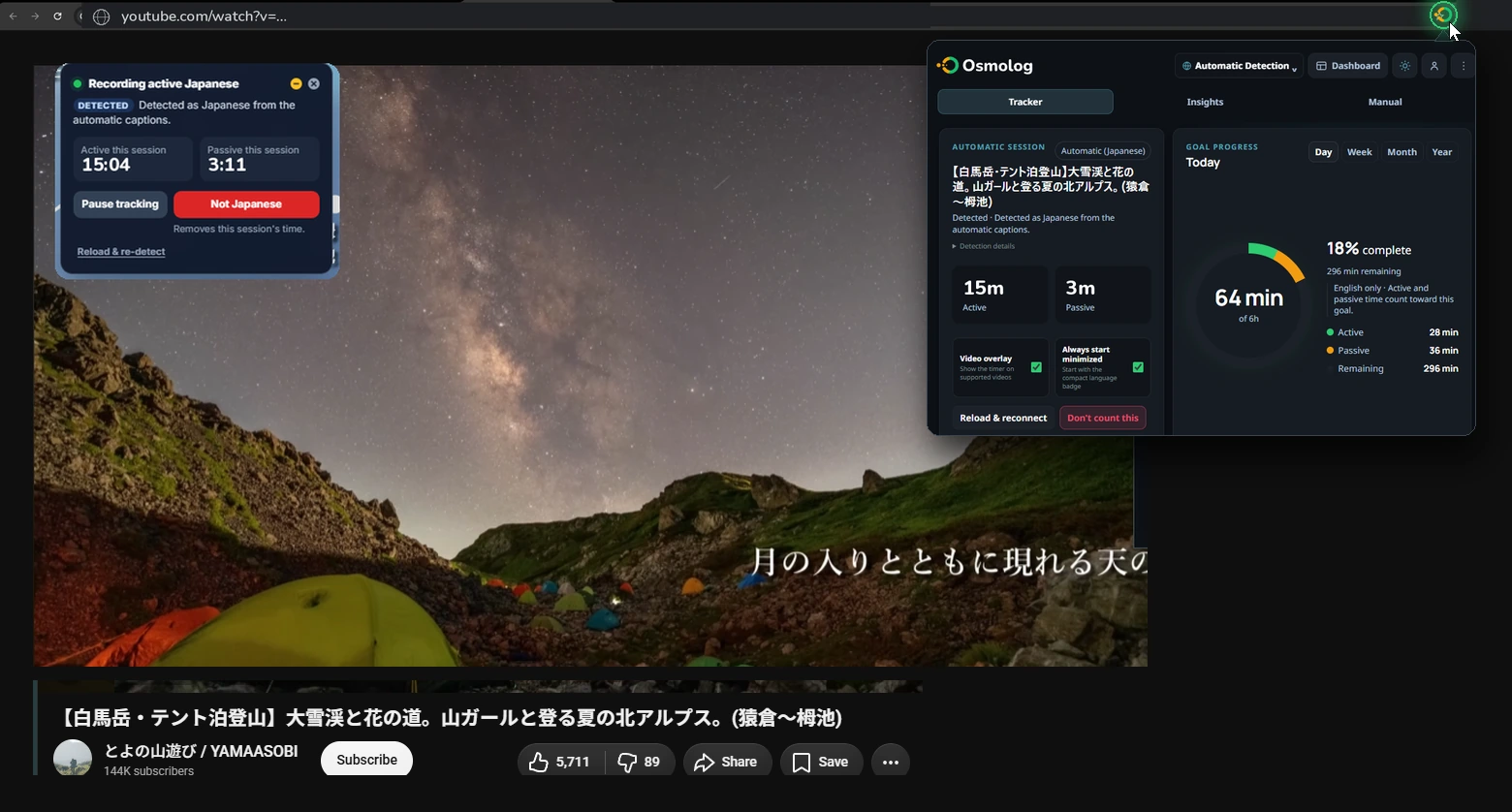
Without Pro full backup, detailed history stays in your browser. Local tracking needs no account, and Osmolog never sends URLs, subtitles, searches or page text to its own services.
If you enable Pro full backup
After you review the disclosure and sign in, Osmolog can store your complete tracker history and settings in your private account backup for recovery. That includes session titles and timing, but excludes URLs, searches, subtitles, page text and artwork URLs.
Usage analytics, if you want to help
There's a switch in Settings → Privacy & data marked Send anonymous usage data. It's off until you turn it on. It sends language, general platform, active/passive duration, broad activity type, date and extension version, without titles, URLs, searches, subtitles or manual notes. Optional error reporting has separate consent. See the privacy policy for the exact data each feature uses.
This website
osmolog.com counts page views through Cloudflare Web Analytics: which page, roughly which country, and where the visit came from. No cookies, no following you around the web. It's completely separate from the extension and can't see anything inside it. It exists so I can tell whether anyone found the site at all.
No advertising, nothing sold
No advertising SDK, no data broker, no sale. There's nobody to sell it to and I'm not going to build that.
Getting it out again
Export a JSON backup for restoring detailed history, or a CSV of your totals. Basic Chrome Sync carries totals and recent daily aggregates, not a complete session archive. Keep a JSON backup before uninstalling or clearing browser data.